

Luxury Interior
Amethyst Gemstone Slab: The Ultimate Design Guide for Bar Tops, Bathrooms and Accent Walls
Some materials whisper luxury. Amethyst shouts it.
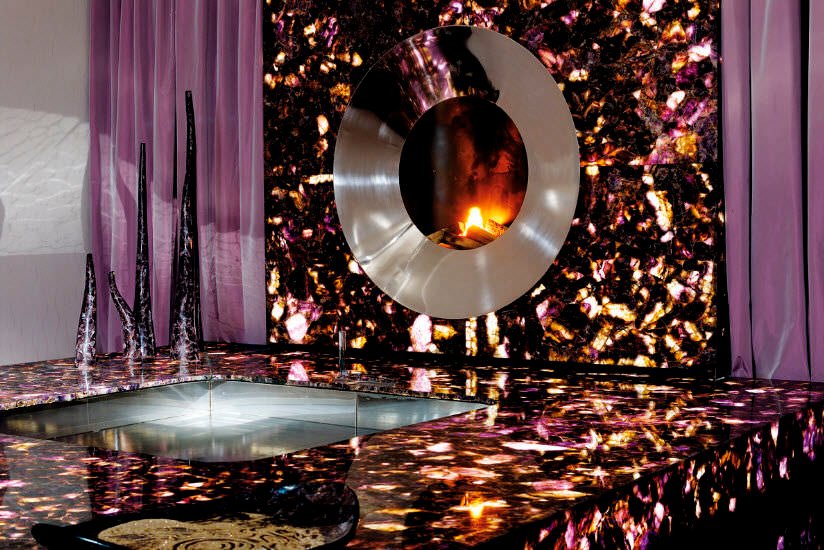
Walk into a room where an amethyst gemstone slab has been used — backlit behind a bar, running floor to ceiling as a feature wall, or forming a vanity countertop in a boutique hotel bathroom — and you understand immediately why this stone is becoming the defining material choice of high-end interiors.
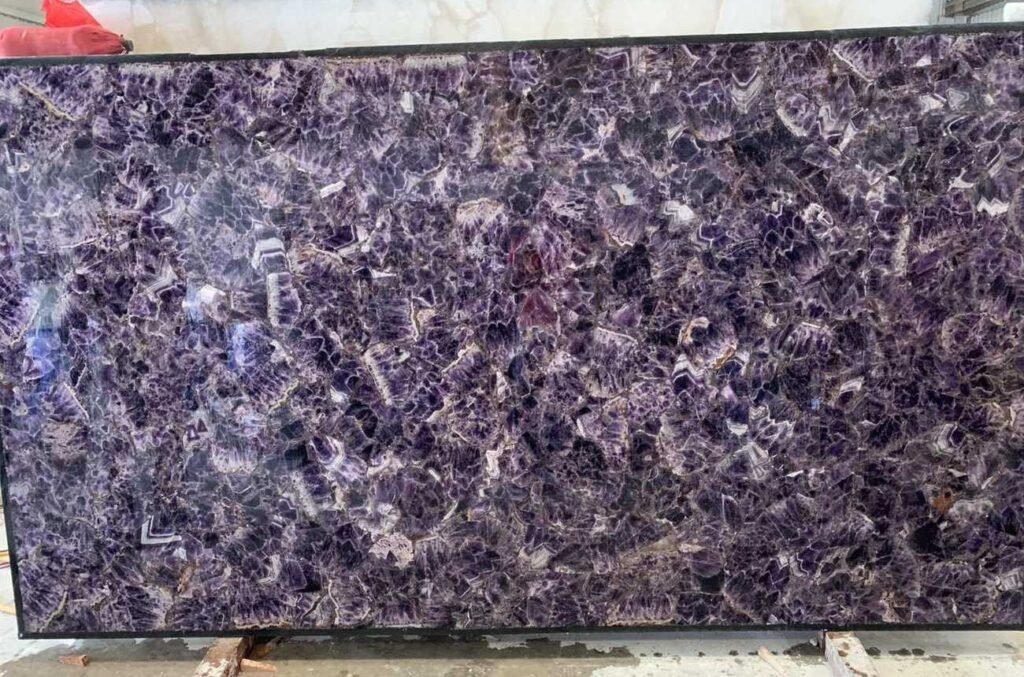
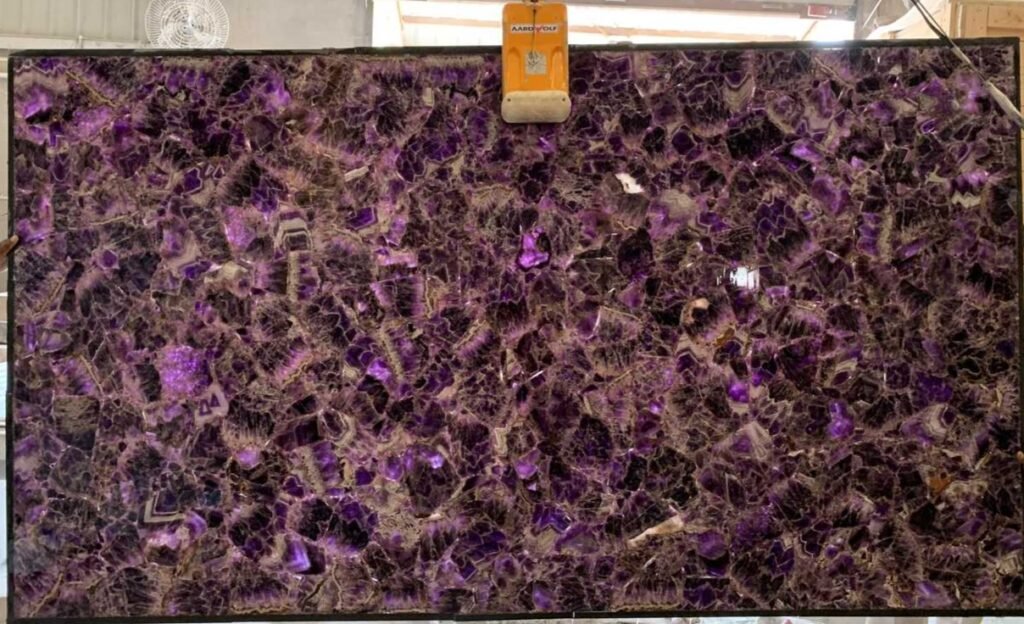
It isn’t just beautiful. It’s alive. Every slab is a one-of-a-kind arrangement of natural violet crystals, formed over millions of years in volcanic rock. No two are identical. And when light passes through the translucent surface, the result is something no engineered material can replicate.
If you’re an interior designer, architect, or homeowner planning a luxury project and you’ve been considering an amethyst gemstone slab, this guide will tell you everything you need to know — from the properties of the stone and which variety to choose, to practical design advice for three of its most spectacular applications.
What Makes Amethyst Gemstone Slabs Different from Other Natural Stones?
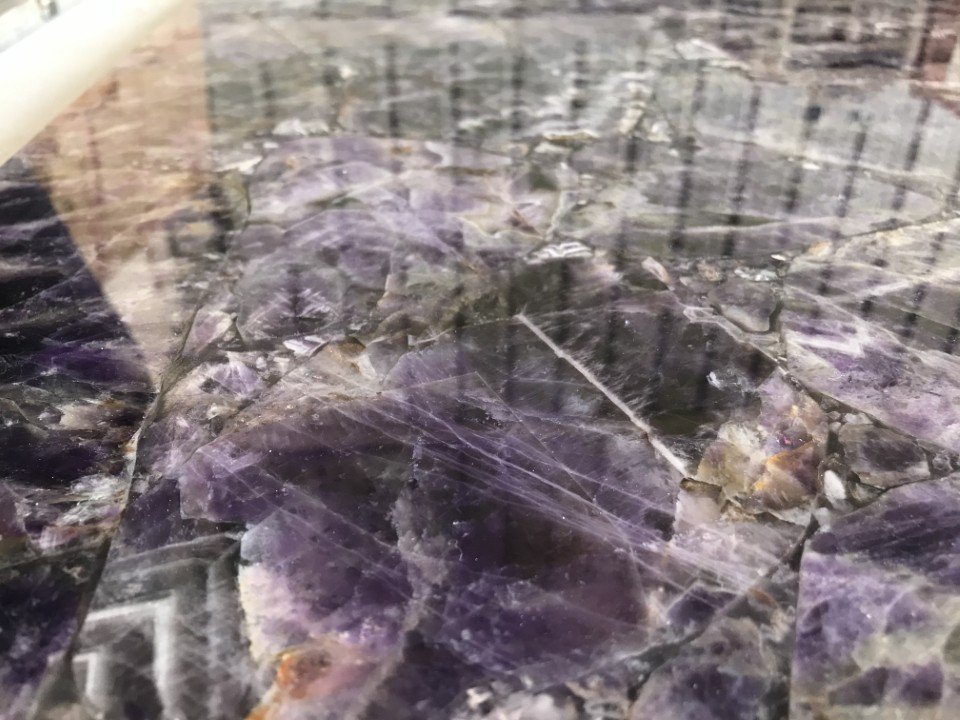
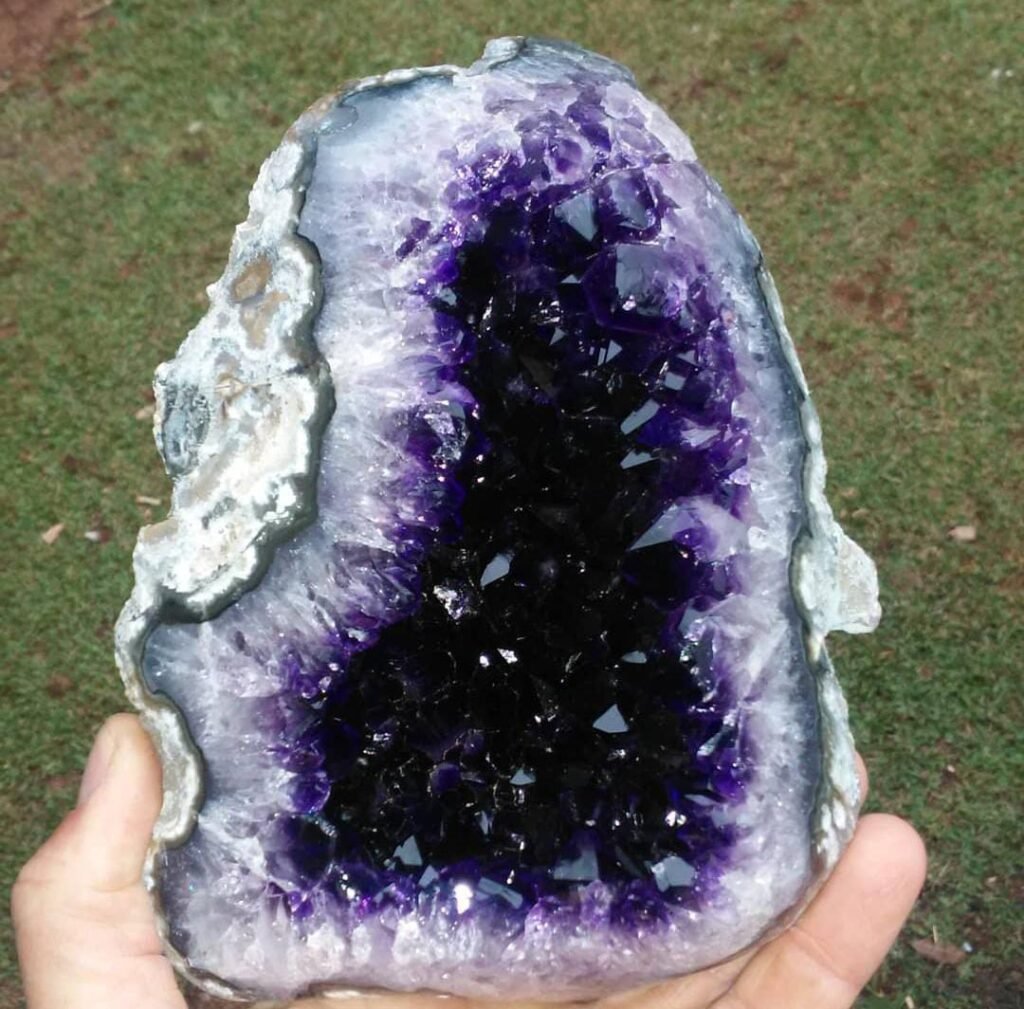
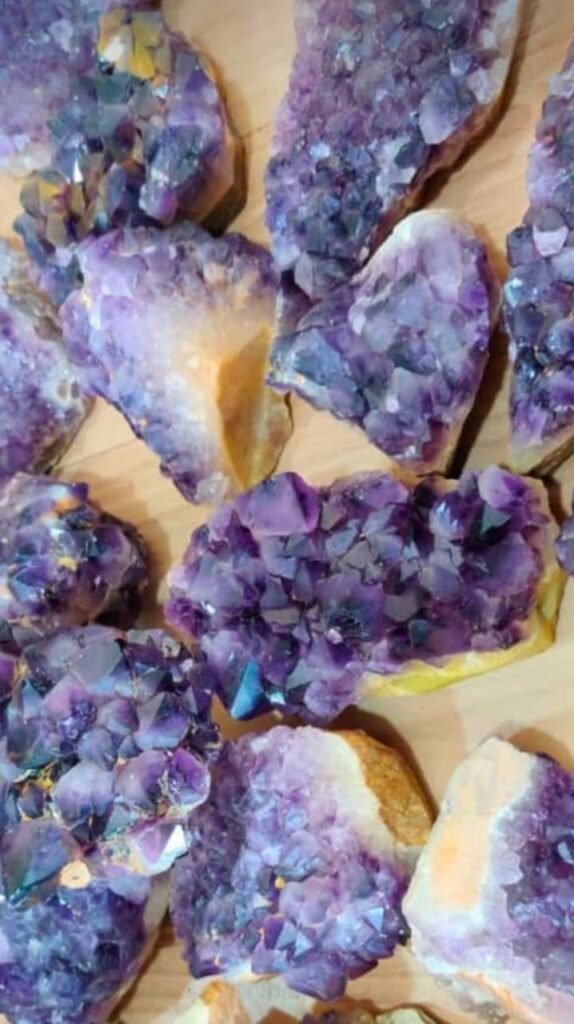
Most natural stones used in interiors — marble, granite, travertine — are opaque. Light hits the surface and stops there. Amethyst is different. It belongs to the quartz family, and its crystal structure is translucent, meaning light doesn’t just reflect off the surface — it travels through it.
This single quality changes everything about how the material behaves in a space.
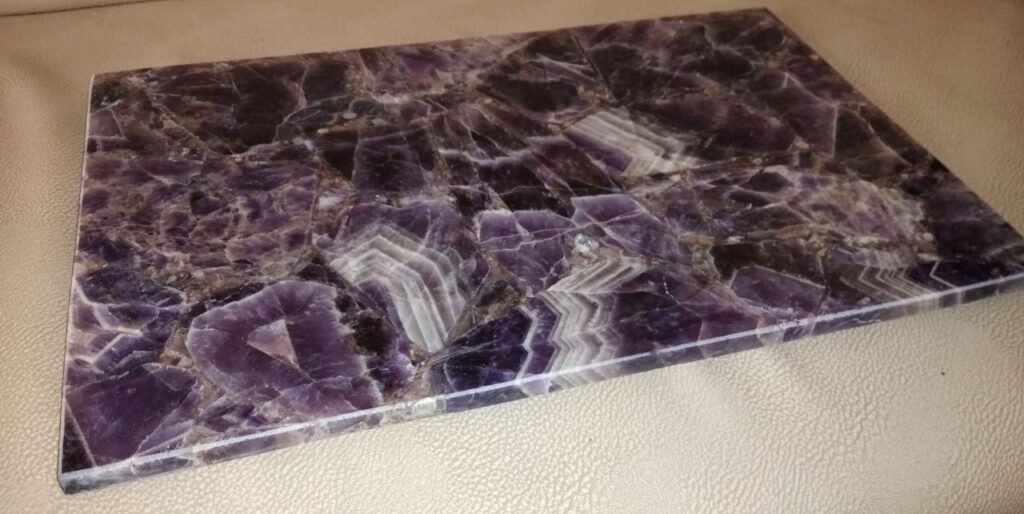
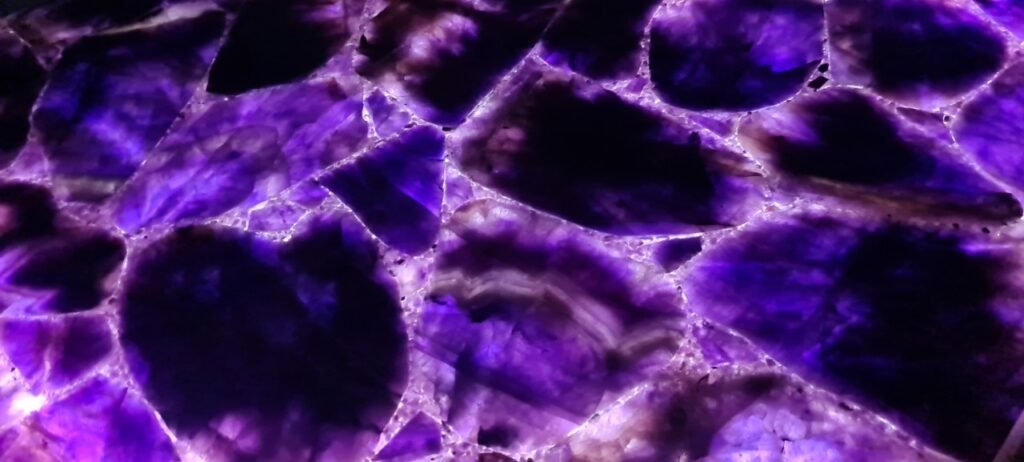
In ordinary daylight, a polished amethyst slab has a deep, lustrous depth that draws the eye in. The natural inclusions, crystal formations and colour variations within the stone create a surface that rewards close inspection. But place an LED light source behind or beneath the slab, and the entire stone transforms into something closer to stained glass — a glowing, crystalline panel that floods a room with warm purple light.
This is why amethyst is in a different category from marble or granite. It doesn’t just look expensive. It performs.
The Key Properties of Amethyst Gemstone
Understanding the technical profile of amethyst helps you specify it correctly and set the right expectations with clients:
Mineral family: Quartz (silicon dioxide, SiO₂)
Colour range: Pale lavender to deep violet-purple
Mohs hardness: 7 — harder than marble (3–4) and comparable to granite
Transparency: Translucent to semi-transparent
Luster: Vitreous (glass-like when polished)
Crystal system: Hexagonal
Specific gravity: 2.65–2.66
Origin: Brazil, Uruguay, Zambia, Russia, India
A Mohs rating of 7 means amethyst is genuinely durable for interior use. It resists scratching better than most decorative stones, and with proper sealing, it performs well across a wide range of applications.
Light Amethyst vs Dark Amethyst: Which Should You Choose?
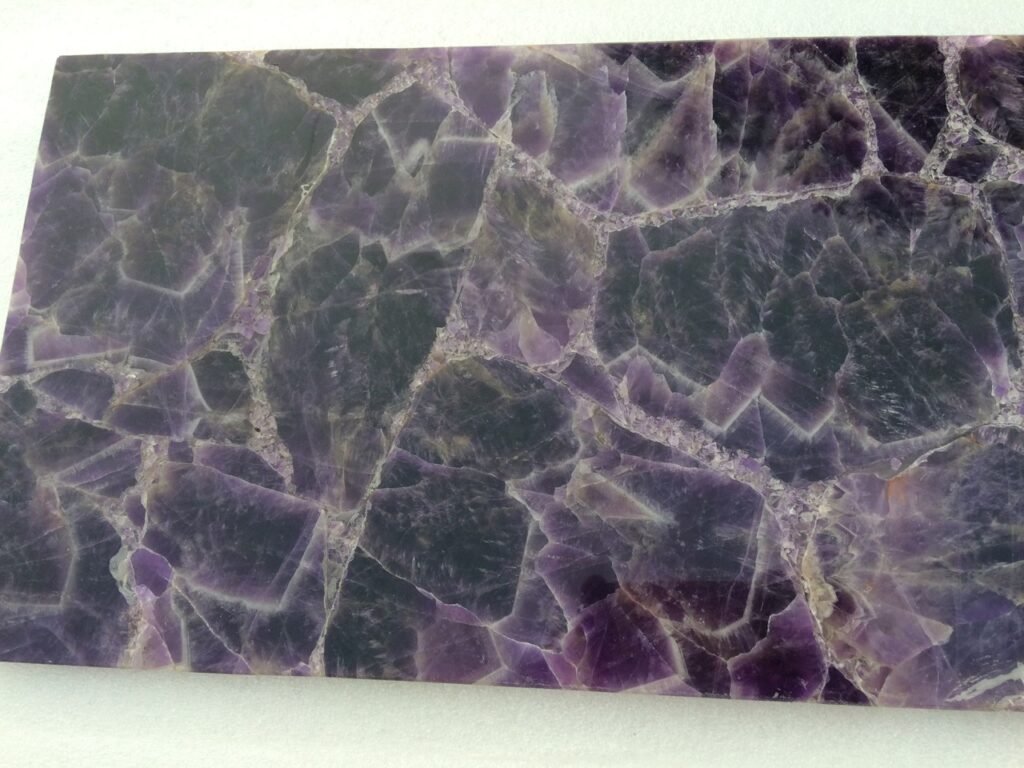
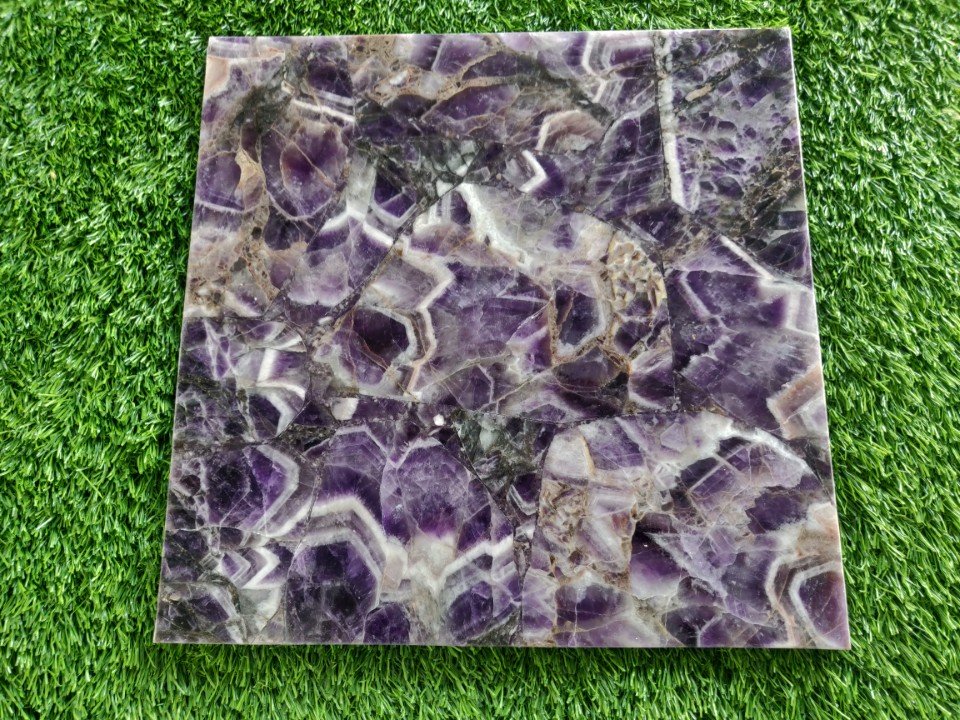
Before you specify a slab, you need to understand that amethyst isn’t a single, uniform material. The colour intensity varies significantly depending on the iron oxide concentration within the crystal structure — and that variation has a major impact on how the stone looks in your space.
Light Amethyst
Light amethyst has a soft, delicate lavender or pale violet tone. It’s calming, luminous and works particularly well in spaces where the design intent is serene and spa-like. In a bathroom, light amethyst creates an almost ethereal quality — especially when paired with warm timber, white stone and soft ambient lighting.
Its translucency is typically higher than dark amethyst, which makes it the first choice for backlit wall panels where maximum light transmission is the goal.
Dark Amethyst
Dark amethyst — including the prized African variety — has an intense deep purple, almost jewel-like quality. The colour is richer, more dramatic, and commands more visual authority in a space. It suits contemporary, maximalist and high-drama interiors. A dark amethyst bar top, backlit with warm LED strips, is one of the most visually arresting surfaces in modern hospitality design.
Both varieties are available from Sia Stones in custom slab sizes, multiple thicknesses, and a range of finishes including polished, honed and matte anti-slip.
Application 1: Amethyst Gemstone Bar Tops — The Statement Surface That Stops Conversations
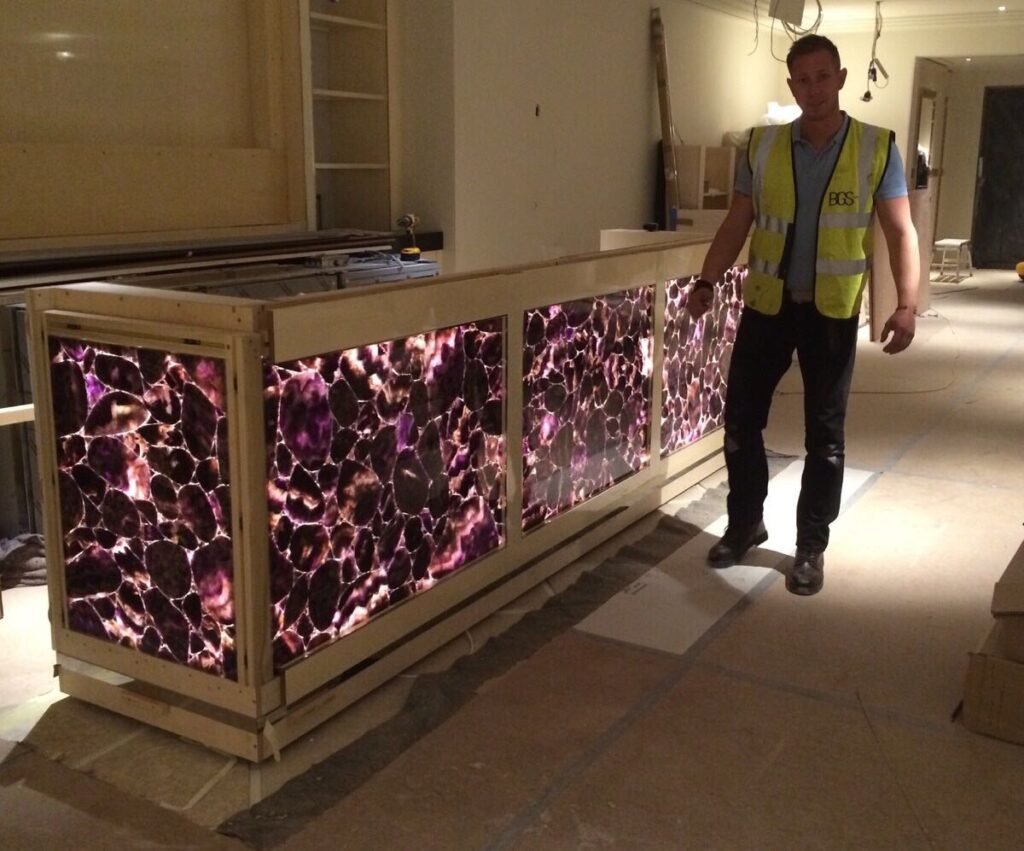
If you want a single design element that makes a home bar, restaurant counter or hotel bar look unlike anything else, an amethyst gemstone bar top is it.
The backlit amethyst bar top has become one of the signature features of ultra-luxury hospitality interiors globally. The reason is simple: it does something no other material does. When guests sit at the bar, they are drawn to the surface beneath them — a glowing, crystalline landscape in deep violet that shifts and changes as the ambient light in the room moves through the evening.
For residential projects, it elevates a home bar from a functional addition to the most talked-about room in the house.
How to Design an Amethyst Bar Top
Choose dark amethyst for drama, light amethyst for warmth: For home bars and hotel counters where maximum visual impact is the goal, dark amethyst is usually the right choice. Its deep violet tones and rich crystal structure look extraordinary under warm LED backlighting. Light amethyst creates a softer glow and works well where the bar is part of a larger open-plan living or dining space that needs to feel cohesive rather than theatrical.
Go backlit: An amethyst bar top without backlighting is still beautiful. But backlighting unlocks the material’s full potential. LED strip lights installed in a channel beneath the slab, or a full LED backlit panel as the base structure, allow the stone to glow from within. Warm white (2700K–3000K) lighting works best with dark amethyst. Cool white (4000K) enhances the lighter, more lavender tones of light amethyst.
Pay attention to edge profiles: The edge of a bar top is where the slab is most visible at close range. A polished waterfall edge — where the slab wraps vertically down the front face of the counter — makes the most of amethyst’s translucency and gives the bar a sculptural quality. A bullnosed edge is a clean, classic choice. Avoid sharp square edges on a bar top, as these are more vulnerable to chipping on a working surface.
Specify 20mm or 30mm thickness: For any horizontal working surface that will see regular use, a thinner slab is a structural risk. At Sia Stones, we recommend 20mm as the minimum for bar tops, and 30mm for longer spans or unsupported overhangs. The additional weight is worth it for the peace of mind and the premium visual presence.
Pair it with the right materials: Amethyst works beautifully with brushed brass, aged bronze and warm gold hardware — the warm metal tones complement the purple hues perfectly. Dark timber cabinetry — walnut, smoked oak, ebony-stained wood — provides a grounding contrast that allows the amethyst to shine. For a more contemporary palette, pair with polished concrete, black steel and smoked mirror glass.
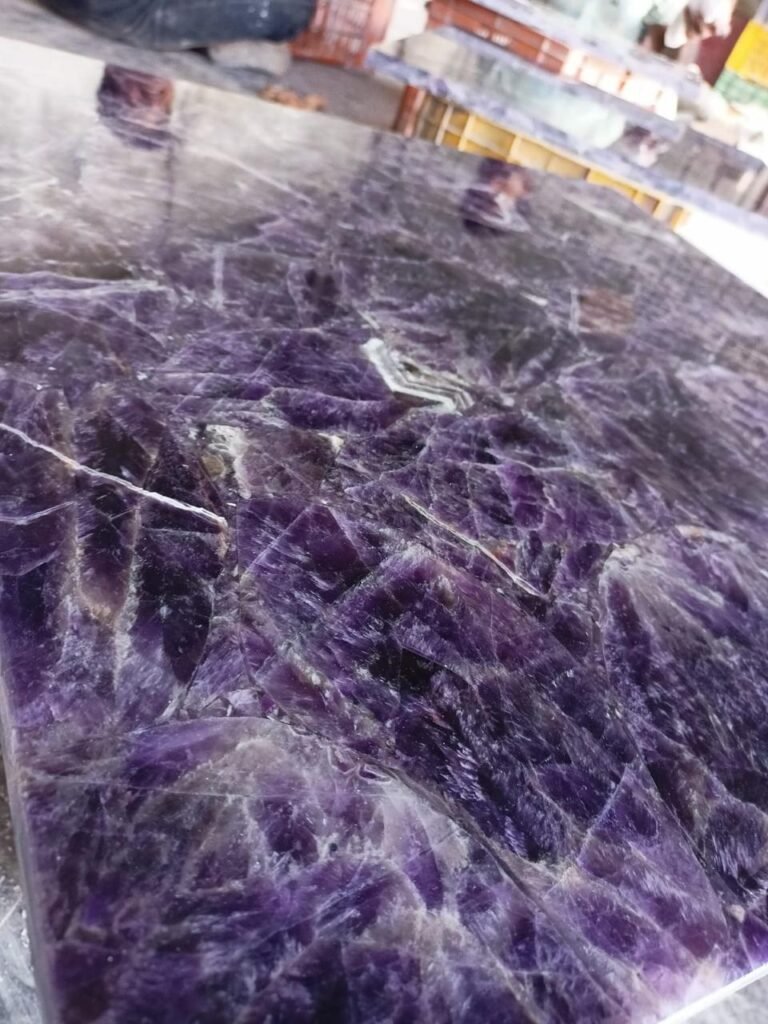
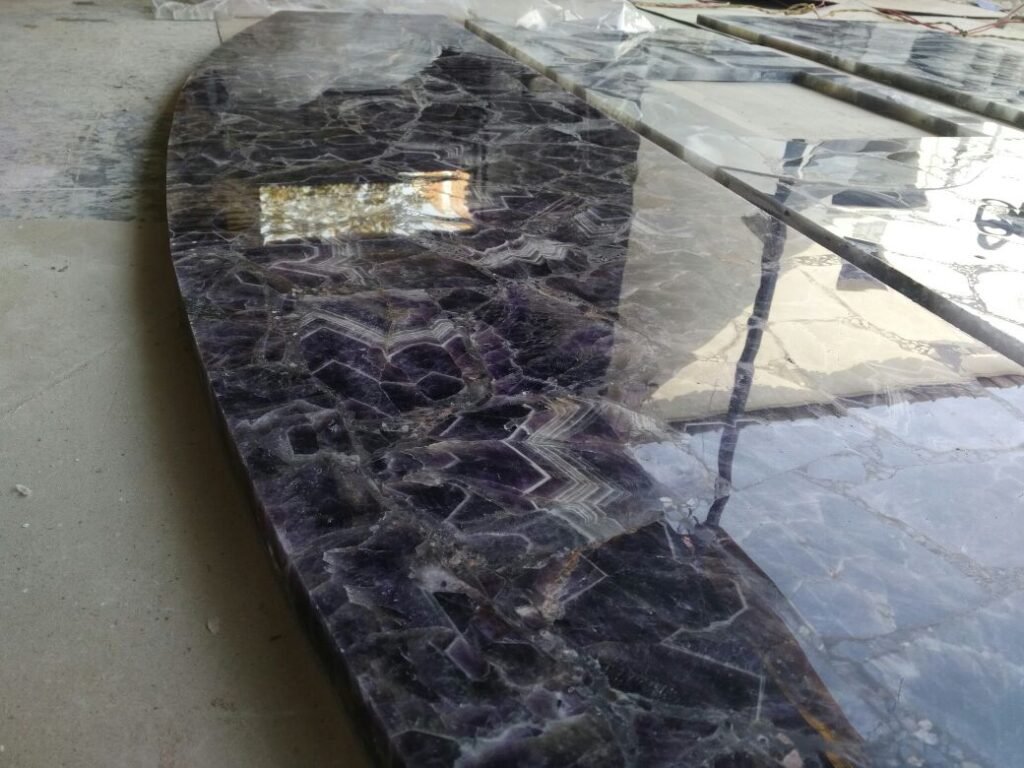
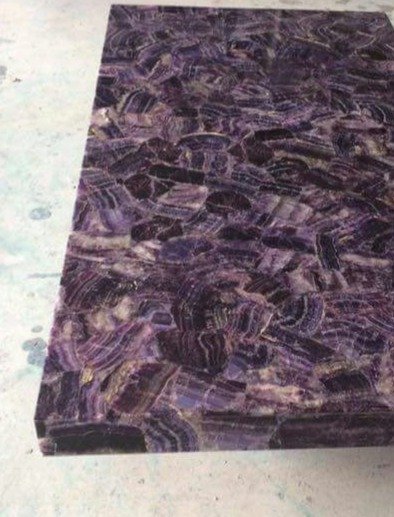
Application 2: Amethyst Gemstone Slab in Luxury Bathrooms
The bathroom is the most personal space in a home. It’s also, increasingly, the space where luxury interior design is at its most ambitious. Homeowners who would never commission a hand-painted mural in their living room will specify natural gemstone surfaces in their master bathroom without hesitation — because the bathroom is a private sanctuary, and it deserves to feel like one.
Amethyst is a natural fit for this application. Its visual associations — calm, luxury, depth — align perfectly with the experience a high-end bathroom is designed to deliver. And practically, its hardness rating of 7, combined with correct sealing, makes it fully viable across a range of bathroom surfaces.
Vanity Countertops
An amethyst vanity countertop transforms the most-used surface in the bathroom into something you look forward to interacting with every morning and evening. Light amethyst in a honed or matte finish has a tactile quality that feels genuinely luxurious — cool to the touch, smooth, and visually calming.
For a double vanity, a single wide slab spanning the full width of the unit makes the most of the stone’s natural pattern continuity. Pair with undermount basins in white ceramic or complementary stone, brushed gold taps and a large mirror with integrated LED lighting. The combination of the mirror light reflecting on the polished amethyst surface is one of those design moments that simply cannot be achieved with any engineered material.
Wall Cladding and Feature Panels
A full-height amethyst wall panel behind the bath or behind the vanity is the most dramatic statement you can make in a bathroom. It doesn’t require the entire room to be clad — a single feature wall, floor to ceiling, is enough to define the character of the whole space.
For backlit wall panels, the standard approach is to mount the slab on a metal frame with an even LED backlight behind it. A diffuser layer behind the slab ensures the individual LED points aren’t visible through the stone — you see only a smooth, even glow. The effect at night, with the bathroom in darkness and the amethyst wall softly illuminated, is genuinely unlike any other material in interior design.
Shower Enclosures and Niches
Using amethyst to clad the interior of a walk-in shower enclosure is the kind of specification that ends up on architecture and design award shortlists. It is also more practical than it sounds. Amethyst’s hardness means it handles water exposure well. The key requirements are thorough sealing on installation and annual resealing thereafter, and specifying a polished finish on all surfaces for maximum ease of cleaning.
Shower niches — the recessed shelf sections built into the shower wall — are a lower-commitment way to introduce amethyst into a bathroom that already has a defined material palette. A single amethyst niche, backlit from behind, acts as a jewel-like accent within a larger marble or tile surround.
Bathroom Flooring
Amethyst gemstone flooring tiles, specified in honed or matte anti-slip finish, work in both wet room and dry bathroom applications. The natural variation in crystal patterns across tiles means every floor installation is entirely unique.
For underfloor heating installations — common in premium bathrooms — amethyst is compatible, but the system should be specified to avoid rapid temperature fluctuations, which can stress the resin bonding in the slab.
Application 3: Amethyst Accent Walls — Making a Room Unforgettable
Outside of kitchens and bathrooms, the amethyst accent wall is the application that generates the most enquiries. And it’s easy to understand why. In a living room, hotel lobby, office boardroom or restaurant, a floor-to-ceiling amethyst panel — particularly when backlit — creates a visual impact that no wallcovering, paint colour or artwork can match.
It is, quite simply, a piece of art built into the architecture of the room.
Getting the Scale Right
The most common mistake in amethyst accent wall design is going too small. A single large slab, or a bookmatched pair spanning floor to ceiling, has an entirely different presence from a wall of small tiles. The larger the panel, the more the natural crystal patterns flow across the surface, and the more the wall reads as a cohesive work of nature rather than a tiled finish.
Where budget requires a tiled approach, use the largest available format — 60 x 120 cm tiles as a minimum — and keep grout joints as tight as possible. Match the grout colour to the tone of the amethyst to minimise visual interruption.
Backlighting an Amethyst Accent Wall
The backlit amethyst accent wall is the specification that defines a hotel lobby, bar or wellness centre in the minds of every visitor who sees it. The engineering is straightforward: the slab is mounted proud of the wall surface on a steel support frame, LED strip lighting is run at the perimeter of the frame, and a diffuser layer ensures even light distribution across the full surface.
The result depends heavily on lighting temperature. Dark amethyst with warm amber LED (2200K–2700K) creates a moody, jewel-like glow — ideal for bars, restaurants and residential living rooms. Light amethyst with neutral white LED (3500K–4000K) creates a more serene, gallery-like effect suitable for spas, hotel lobbies and corporate environments.
Where to Use an Amethyst Accent Wall
Living rooms: The wall behind a sofa or fireplace is the natural focal point of any living room. An amethyst feature wall in this position turns the room into something guests talk about long after they leave. Pair with velvet seating, metal accents and low, indirect ambient lighting.
Hotel lobbies: Amethyst behind the reception desk is a brand statement that communicates luxury more effectively than almost any other design choice. The stone’s natural associations with calm and prestige align perfectly with the guest experience a premium hotel wants to create.
Restaurants and bars: A backlit amethyst wall behind the bar creates an iconic visual backdrop. It works equally well as a dividing wall between dining zones, where the glow from the stone provides gentle, atmospheric light.
Spa and wellness centres: Amethyst’s long-standing cultural associations with peace, healing and tranquillity make it an obvious choice for treatment rooms, meditation spaces and spa reception areas. The warm glow of a backlit amethyst wall panel contributes genuinely to the sensory environment these spaces are designed to create.
Corporate offices and boardrooms: Premium corporate environments are increasingly using luxury natural stone in place of bland finishes. A backlit amethyst wall in a boardroom or executive reception communicates confidence, distinction and taste.
How to Care for Your Amethyst Gemstone Slab
Amethyst is a durable, long-lasting material when properly maintained. The key things to know:
Sealing is essential: Seal the surface before installation and reseal once a year, or as your stone care professional recommends. This protects the polished finish and the resin bonding within the slab from moisture and acidic substances.
Clean spills immediately: Acidic liquids — citrus juice, wine, spirits, coffee — should be wiped up straight away with a soft, damp cloth. Don’t let them sit on the surface.
Use pH-neutral cleaners only: Harsh chemical cleaners, bleach, and abrasive products will dull the polished surface over time. A mild stone-specific pH-neutral cleaner is all you need for daily maintenance.
Avoid direct, prolonged UV exposure: Intense sunlight over a sustained period can gradually affect the natural colour of amethyst. For installations in rooms with heavy direct sun, a UV-filtering window treatment is recommended.
Don’t use abrasive pads or steel wool: Even though amethyst is hard, aggressive scouring will scratch and dull the polished surface.
Frequently Asked Questions About Amethyst Gemstone Slabs
Is amethyst gemstone slab suitable for kitchen countertops?
Yes — amethyst’s Mohs hardness of 7 makes it harder than marble and comparable to granite, so it can handle kitchen use. We recommend a minimum 20mm thickness and a high-quality penetrating sealer applied before installation. Keep in mind that it is a premium material, and most clients choose to use it in bars or bathrooms rather than a heavily worked kitchen surface. But for a kitchen island or display counter, it makes an extraordinary statement.
Can amethyst slabs be backlit?
Absolutely. Amethyst’s natural translucency is one of its defining qualities, and backlighting is one of the most popular specifications we supply. We engineer our backlit slabs specifically for this application — the stone is sliced thinner to maximise light transmission and bonded to a specialist backing for structural integrity. The result, with the right LED setup behind it, is genuinely breathtaking.
How is the price of an amethyst slab calculated?
Pricing depends on the size of the slab, the thickness, the variety (dark vs light, African vs South American), any prefabrication work such as countertop cutouts, and the finish specified. Our standard price range is USD 97 to USD 156 per square foot ex-factory. Contact our team for an exact project quote — turnaround is within 12 hours.
Where does Sia Stones source its amethyst?
We source amethyst rough from the world’s leading deposits — Brazil, Uruguay, Zambia, Russia and India. Every slab is fabricated from genuine, natural amethyst, and we offer third-party certification on request to confirm authenticity.
Do you ship internationally?
Yes. We ship to the USA, UK, France, Germany, Cyprus, UAE, Australia, Canada and beyond, via established logistics partners including DHL, FedEx, Maersk and Lufthansa Cargo. Sea freight is the most cost-effective option for large slab orders. Air freight is available for time-sensitive projects. Contact us for a shipping quote to your location.
Ready to Source Your Amethyst Gemstone Slab?
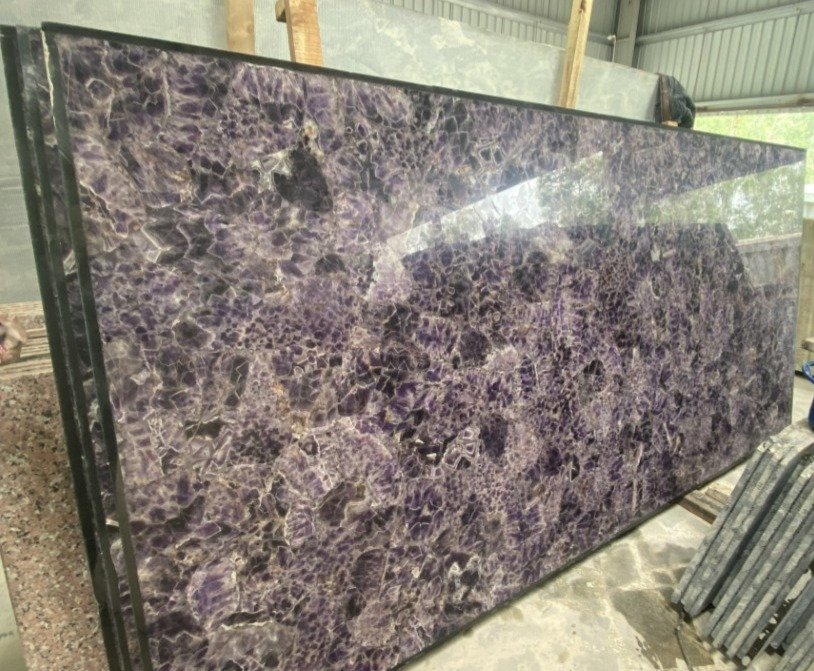
Whether you’re designing a home bar, planning a luxury bathroom renovation, or specifying a feature wall for a hospitality or commercial project, Sia Stones has the amethyst slab to bring your vision to life.
We’re a manufacturer and global exporter with over 20 years of experience supplying architects, interior designers, contractors and homeowners across four continents. When you buy from us, you’re buying direct from the source — which means better pricing, complete control over specification, and a team that knows these stones better than anyone.
Here’s how to get started:
Browse our Amethyst Gemstone Slab collection — see every variety and finish option
🔹 Order a sample — check the quality and colour in your own space before committing
🔹 Request a price quote — our team responds within 12 hours
🔹 Explore our full gemstone slab range — malachite, lapis lazuli, labradorite, tiger eye and more
📧 sales@siastones.com
📞 Global: +1 (213) 459-3949 | India: +91-73748 36384
Sia Stones – Luxury Natural Stone Slabs, Tiles & Countertops. Manufactured in India. Delivered Worldwide.